
Jewelry in the Bible: Beauty, Meaning and What Matters Most
Jewelry appears throughout the Bible as a gift, a mark of honor, an example of skilled craftsmanship and a symbol of something deeper. Scripture does not treat every form of adornment as wrong, but neither does it allow outward beauty to become the source of our worth, protection or devotion.
Instead, the Bible repeatedly brings the focus back to meaning, worship and the condition of the heart.
What does the Bible say about jewelry?
The Bible does not give a universal prohibition against wearing jewelry. Gold, precious stones, rings, bracelets and other forms of adornment appear in many different settings throughout Scripture.
Sometimes jewelry is given as a generous gift. Sometimes precious materials are used in worship according to God's instructions. At other times, jewelry becomes part of a warning about pride, excess or placing too much value on outward appearance.
The object itself is rarely the whole question. Scripture asks us to consider what it represents, how we relate to it and where we are placing our trust.
What comes into our minds when we think about God is the most important thing about us.
A. W. Tozer, The Knowledge of the Holy
Tozer's words help place the question in perspective. What we wear may carry meaning, but what we believe about God reaches far deeper.
Jewelry as a gift and sign of honor
In Genesis 24, Abraham's servant presents Rebekah and her family with jewelry and other valuable gifts. Within the story, these objects form part of a significant meeting that will lead to Rebekah becoming Isaac's wife.
This passage does not present jewelry as a source of spiritual power. It appears as something valuable that can communicate generosity, honor and the significance of a relationship.
We still recognize this meaning today. A piece of jewelry may mark a marriage, a friendship, a season of change or a prayer carried for someone we love. Its value is not only found in the material. It can also be found in the story entrusted to it.
Precious stones and sacred craftsmanship
One of the Bible's most detailed descriptions of precious materials appears in Exodus 28.
God gives instructions for the breastpiece worn by the high priest. It includes twelve precious stones, each associated with one of the tribes of Israel. The stones are not treated as magical objects. They carry names and meaning within an act of remembrance before God.
This is a beautiful example of skilled craftsmanship serving something greater than itself. Color, form and precious materials are given significance because of what they represent.
Beauty is not dismissed. It is placed in service of remembrance, worship and responsibility.
Wisdom described as adornment
The Bible also uses jewelry as a picture of qualities that cannot be purchased or worn.
In Proverbs 1:8-9, faithful instruction is compared with a garland and a chain worn around the neck. Wisdom becomes the true adornment.
This image turns our usual understanding of beauty inward. The qualities that make a life beautiful are not limited to what other people can see. Wisdom, humility, faithfulness and love shape the person beneath the surface.
A necklace may be visible, but the truth it calls to mind can reach much deeper.
When outward beauty becomes the focus
Scripture also contains important warnings about adornment.
First Peter 3:3-4 contrasts outward adornment with the lasting beauty of a gentle and quiet spirit. Christians have not always applied these verses in exactly the same way. Yet the central emphasis is clear: outward appearance must not become the foundation of our identity or the measure of our worth.
Jewelry can be beautiful, but it cannot make us worthy. It can communicate something meaningful, but it cannot create the character it represents. It can remind us of faith, but it cannot replace a living relationship with God.
Is it wrong for Christians to wear jewelry?
Christians can wear jewelry with freedom and discernment. A more helpful question may be: what place does it hold in my heart?
- Am I using this piece to express gratitude or to prove my worth?
- Does it encourage remembrance, or has it become something I feel unable to trust God without?
- Does it prompt generosity, prayer or meaningful conversation?
- Can I enjoy its beauty without allowing appearance to define me?
These questions are not intended to create anxiety around something beautiful. They help us hold material things in their proper place.
For a closer reflection on symbols, worship and idolatry, read Can Christians Wear Christian Jewelry?
What Christian jewelry can mean today
Christian jewelry can serve as a quiet, physical reminder of a truth we want to carry into ordinary life.
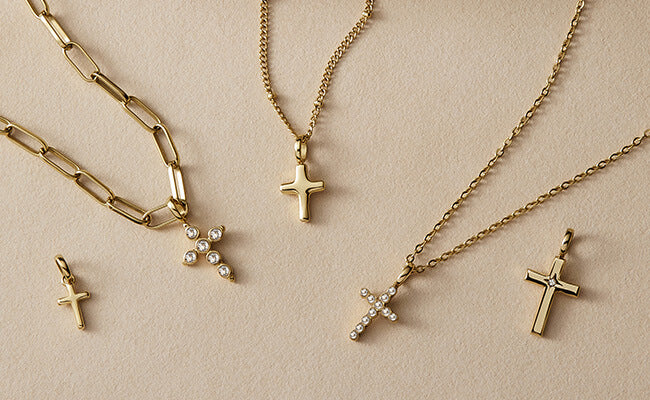
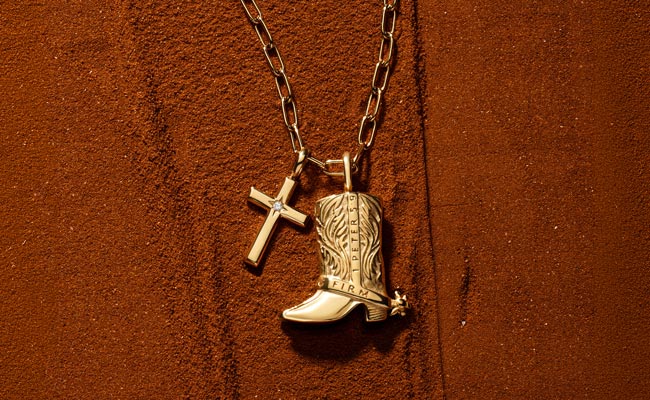
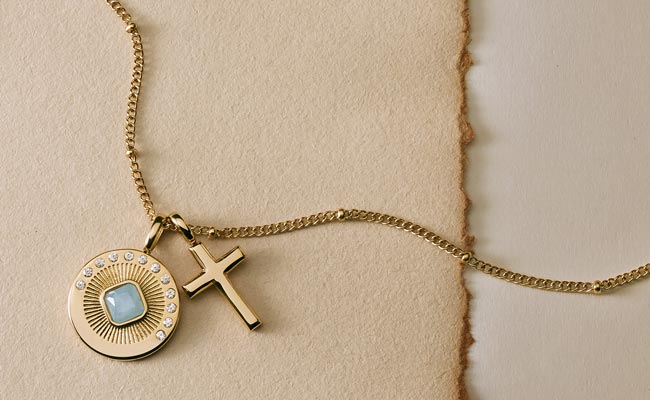
A cross may call the wearer back to the grace of Christ. An engraved verse may prompt prayer during a difficult day. A pendant given by a friend may become a reminder that someone is praying alongside us.
The piece does not hold spiritual power of its own. It does not make the wearer more faithful, guarantee protection or bring God closer. Its purpose is to point beyond itself.
This distinction is central to the design philosophy of The Faith. Our jewelry is created to help keep Scripture and prayer close without becoming a substitute for either. You can read more in Why We Design Christian Jewelry.
Beauty that points beyond itself
We do not want merely to see beauty, though, God knows, even that is bounty enough.
C. S. Lewis, The Weight of Glory
Lewis goes on to describe the deeper longing stirred by beauty as a desire to be united with it. Beauty becomes a signpost toward something greater than itself.
The Bible presents a similarly rich view of jewelry. It shows us beauty used with intention. Precious materials carry names and memories. Gifts communicate honor. Adornment becomes a picture of wisdom. Yet no outward object can supply the worth, character or security that comes from God.
Perhaps that is the most meaningful role jewelry can hold: not asking us to place our faith in the object, but gently directing our attention toward the truth it represents.